The Talented Mr. Ripley
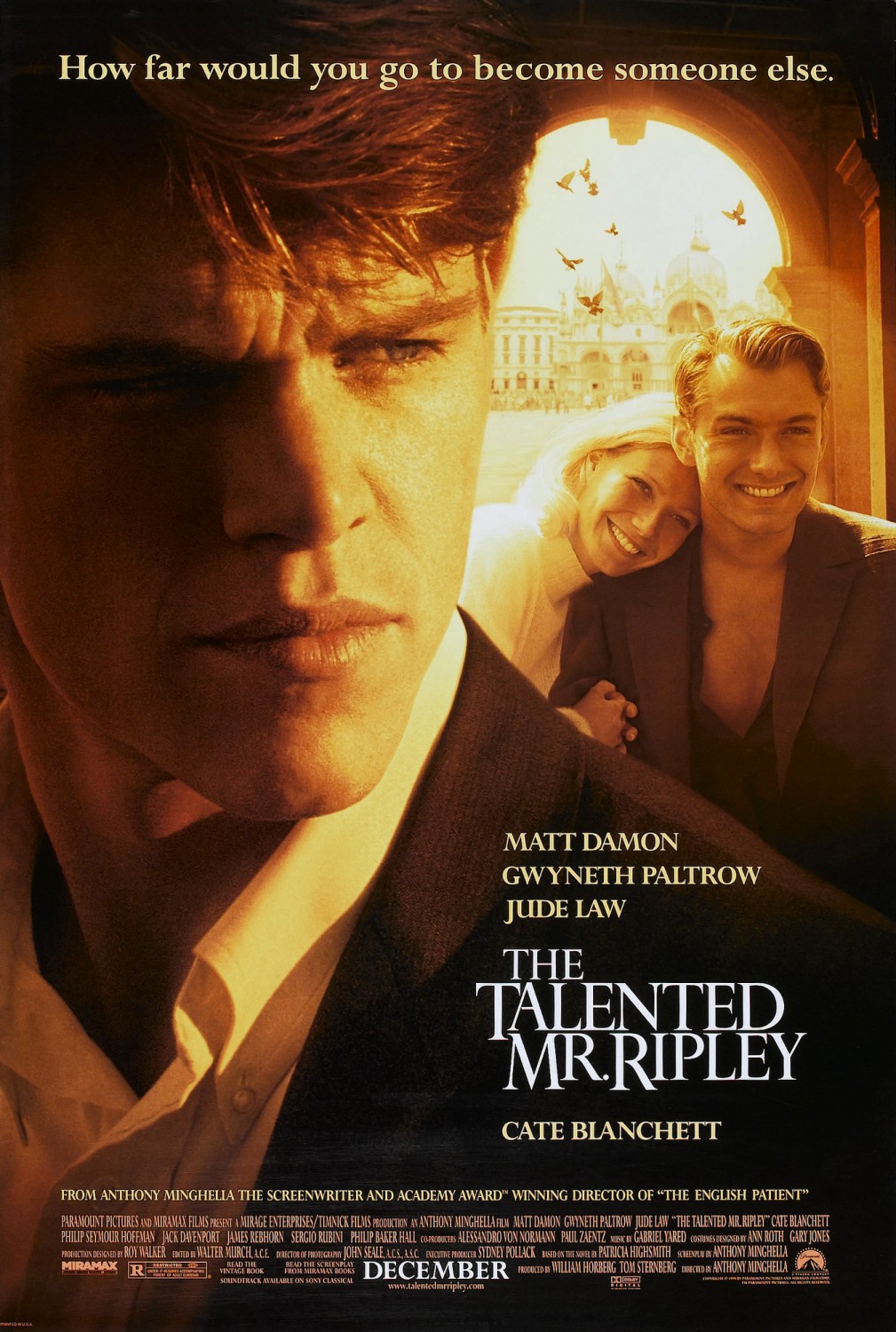
Part of what makes The Talented Mr Ripley so effective is the casting of Matt Damon in the lead. Most of us have been in his position; awkward, insecure and in awe of someone like Dickie Greenleaf, played by the never better Jude Law.
Dickie is someone who has it all, and that gives him the ability to take whatever he desires. His life is a closed loop of justification. Dickie is an excellent study in the narcissist and their immense charm, and the deep, intense connections they are able to create with others.
He seems to generate chemistry. Marge tells Tom that Dickie makes people feel as if the sun is shining on them; it’s his gift.
His friendship is deeply flattering to Tom, who is attracted to the non-stop excitement and gratification of Dickie’s life. Of course, Dickie uses him; chews him up and spits him out, and then feels derision for Tom for being so prone to exploitation.
Dickie is in turn disillusioned with him for being so insubstantial. When Tom reveals his tenderness, in terms of being so hurt by Dickie’s derision, we feel that as an audience.
Patricia Highsmith, author of the novel that forms the basis for the script, really understood people who use lies as an instrument for getting things done and makes their internal state – both their experience of reality and the motives that drive their behaviours – clearly apparent to a spectator.
In fact, if the story has a ‘moral’, it is that when a person lies to gain advantage, they damage the fabric of reality, not only for others, but more crucially, for themselves.
The film makes very powerful use of mirrors as vessels for reality. The first image of a mirror comes when Tom, not unlike a valet, sits beside Dickie while he takes a bath. As they play chess, Tom sees his reflection in the water. The allusion to Narcissus is obvious.
Tom asks Dickie if he can get in with him because he’s cold. Dickie refuses and gets out so Tom can use the water, and catches Tom watching him in the reflection of the mirror as he dries himself. Because Tom wants to be Dickie, there’s the powerful suggestion that he seeks to literally merge with him through sex.
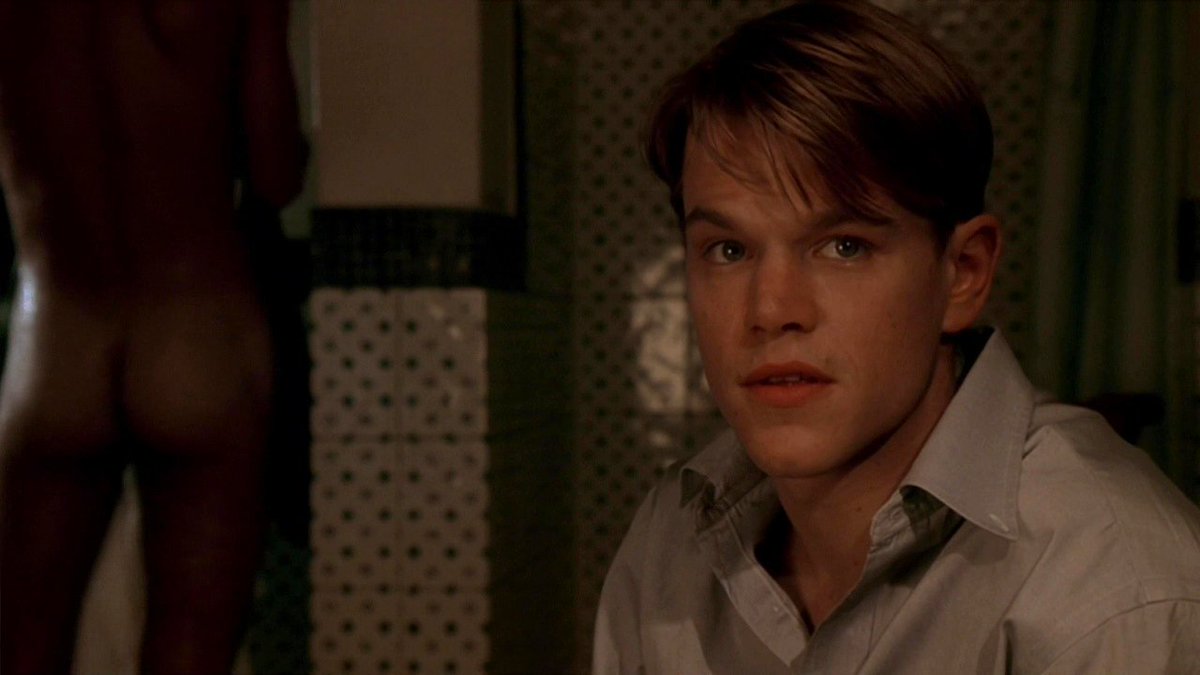
From this point, mirrors become the governing metaphor for the film. They are a representation of reality; both in terms of the way Tom relates to reality, and then works to construct it through lying, manipulation and murder.
The bathroom scene also sets up the film’s other powerful metaphor, that of water as symbolic of sex and sexuality. Water not only denotes sex, but also the way the characters relate to it as they begin their voyage of adult interpersonal relations.
Dickie first takes Tom out on the water with him in his yacht and later, when Dickie, Freddie Margot and Tom go out in the boat together, everyone – Freddie, Marge and Dickie – all go swimming, while Tom stays on deck, reading.
Tom covets Dickie’s reality and will stop at nothing to achieve it. This desire and the actions it precipitates prove to be cataclysmic for who everyone Tom is intimate with. Essentially, lying fractures Tom’s reality to the point where he loses his grasp on it, and he has to destroy what he loves in order to maintain the deception.
The final image of Tom in ‘hell’, his reflection trapped within a series of mirrors that reflect each other, is a brilliant metaphor for someone who has fractured reality so severely through their dishonesty that they have become completely lost and untethered.
The Talented Mr Ripley utilises the various elements of style with an outstanding cast and a capable director to create a relatively conventional and simplistic, yet near-peerless essay on the terrible trajectory of the narcissist who succeeds in bending reality into the shape of his fantasies.


 Theme Park at its Darkest
Leave a comment