The Monk
2.
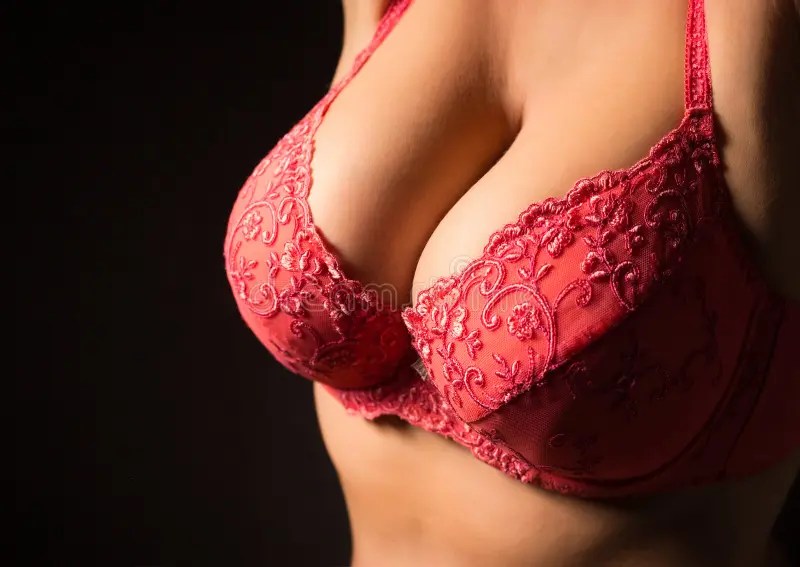
Certainly, this is high drama, and skilfully rendered by Mr Lewis. I have not chosen to recount it here for that reason, however. I reproduce it because the breast, probably the only breast Ambrosio has encountered – aside from his mother’s when he was an infant – appears to him as an enigma of overwhelming power.
It’s a complex scene, and for me as a reader, fixed the tragedy of his office in the forefront of my thinking: he has taken an oath never to pursue, or penetrate the ‘thousand wild wishes that bewilder his imagination’.
**
Such excerpts are affirmations of why we continue to read ‘antique’ literature. It’s not simply the beauty of the language: it’s the ingenuity of the author. Lewis’ insight into the figure of the monk Ambrosio, whose weaknesses and vulnerabilities have been layered in by the religious instruction that has deliberately structured his character, is a revelation.
What mostly caught my attention is the breast itself – as you are, by this point, entirely aware. It has been a long time since I have read – or heard – any description of a breast that was so evocative, let alone so memorable.
And while it is not necessary to quote any further from the book to make my point, I will continue as the following lines from further down the page are simply too good not to share.
‘During his sleep, his inflamed imagination had presented him with none but the most voluptuous objects. Matilda stood before him in his dreams, and his eyes again dwelt upon her naked breast…
‘Sometimes his dreams presented the image of his favourite Madona, and he fancied that he was kneeling before her: as he offered up his vows to her, the eyes of the figure seemed to beam on him with inexpressible sweetness; he pressed his lips to hers, and found them warm: the animated form started from the canvas, embraced him affectionately, and his senses were unable to support delight so exquisite.
‘Such were the scenes on which his thoughts were employed while sleeping: his unsatisfied desires placed before him the most lustful and provoking images, and he rioted in joys ‘til then unknown to him.’
P. 61
**
One of the most romantic things I’ve come across in literature is a beautiful sequence from Thomas Hardy’s Tess of the D’Urbervilles. Tess is on her way to church when she and her companions are confronted by an enormous muddy puddle in the middle of the road.
Uncertain of how to avoid the impact that such a disaster would make on their delicate shoes and dresses, they are soon met by the figure of the dashing, eligible dairy farmer, Angel Clare, walking along the road toward them in his trusty gumboots. He offers to carry each of the girls across the puddle in order that they can make it to church unsoiled and on time.
As Angel lifts each of them into his arms, they are forced to confront, in his body language and attitude, the feasibility of their hopes for his attention. Tess is last, and Hardy guides us through the glorious convolutions of their thoughts as he holds her close.
Turning forty has all kinds of effects for different people, but for me, I think one of the most pronounced was that I realised I was on a continuum of change. As a young person, I assumed that my own experience of something like sex, or cultural attitudes to sex, were a kind of ground zero, or natural condition.
As time has passed and sexual mores have been challenged, maybe most of all by the evolution of technology, attitudes to sex, love and beauty have changed, and some political forces have worked pretty hard to sever what were once considered the essential relationships between them.
Sex has never been so accessible as now, courtesy of the smartphone and the dating app. In the same way, anyone who can access the internet can see more breasts in an hour than Ambrosio could have hallucinated over the course of a lifetime.
Whether that’s a moral issue is beyond the scope of this blog to contemplate. However, I wish that every breast exerted such mythological power. And if the act of sex itself is less impactful than being carried across a muddy puddle in the arms of a dashing dairy farmer, my guess is that you’re doing it wrong.


 Theme Park at its Darkest
Leave a comment