De Palma Goes For Gold
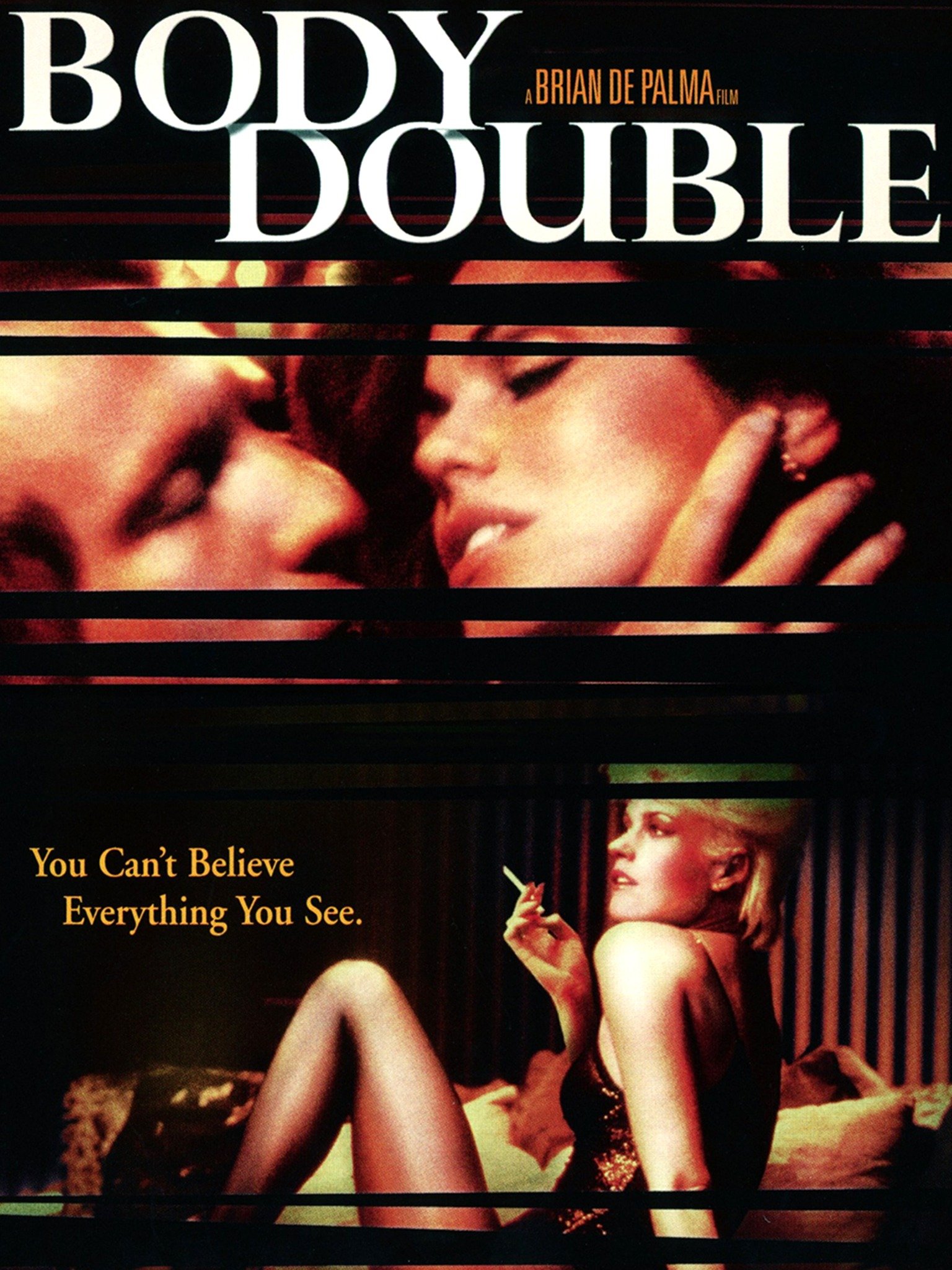
I was surprised I’d never seen Brian De Palma’s 1984 film Body Double until I discovered it available for free-to-air viewing on SBS iView last night. My interest was piqued the night before when I watched Noah Baumbach’s doco De Palma, recommended by a friend.
The doco felt like a puff-piece; De Palma talking about each of his films chronologically for a few minutes at a time. I saw and enjoyed many of Brian De Palma’s films as a kid, and the ones I couldn’t see, like Scarface, radiated a kind of taboo charisma until I was finally old enough.
In fact, the first time I saw Scarface was on the big screen at the now-defunct Trak Cinema in Toorak. The seats were as hard as stones, but the cinema spent a fortune upgrading its screen and sound system, which was just in time for a re-released, upgraded print of the Pacino gangster classic.

De Palma’s films always make an impact, and I remember Scarface knocking me flat. It was a beautifully made film that came off as a complete, unqualified success; great director, great writer, great lead performance. It felt Shakespearean in scale and execution. I went to see it twice; once at the start and then at the finish of its ten-day screening season.
De Palma doesn’t enjoy the reputation as an auteur like Scorsese or Coppola; I had formed the opinion this was because his films had dated and, with the exception of Scarface, become somewhat hokey. There’s also the issue of his questionable treatment of women in his films. I’d been meaning to have a look at Blow Out in recent times, after Tarantino nominated it as one of his four or five favourites.
I flicked on Body Double and realised I hadn’t seen it; I had, however, seen Rear Window and Vertigo, several times because they were assigned texts at university, and recognised the allusions the film was making. There was something reassuringly chintzy in this, so I decided to sit and watch the whole film.
De Palma always goes hard. By the time the protagonist, Jake Scully, has begun stalking the neighbour he has been peeping on through a telescope and then steals her discarded panties when she throws them in a rubbish bin, I was laughing out loud.
‘And he wonders why people say he doesn’t like women!’ I laughed to myself. This was, of course, confirmed when the object of Jake’s adoration is finally slain with a gigantic drill that penetrates her in such a way, on such an angle, that it couldn’t possibly look any more like a penis.

‘Outrageous!’ I gleefully shouted at the television. ‘They don’t make ‘em like that anymore!’
The film made its way to climax and hadn’t generated much more momentum than a telemovie until… we reached the twist. It was at that instant I felt the hand of De Palma’s intellect reach out of the television and smack me squarely across the face.
Even though the film is forty years old, I won’t explain the climax as that is disrespectful to everyone involved, other than to say De Palma is completely in control. At the denouement, he provides a conclusion that makes comment on its Hitchcockian inspiration, and even goes so far as to further Hitch’s ideas.
When questioned about misogyny, De Palma responded: ‘I don’t think there is any room for morality in art, anyway. I mean, what’s the morality of a still life? I don’t believe there are any good fruit or bad fruit in the bowl.’
…And then, I felt a little bit embarrassed. Just because De Palma has a woman murdered with a drill, doesn’t mean he wants to murder a woman with a drill, nor does it mean he doesn’t ‘like’ women generally. It doesn’t say anything about De Palma at all, and anyone who thinks it does is a fool.
I first heard of ‘the male gaze’ in relation to Laura Mulvey’s article ‘Visual Pleasure and Narrative Cinema’ in first-year university film studies. We watched the film Klute as a means of exploring Mulvey’s ideas and I was one hundred per cent impressed. And I began dissecting everything I watched from that point on with my set of university-approved feminist/queer/Marxist instruments.
Eli Roth was lambasted as a misogynist upon the release of his torture porn film, Hostel II. When grilled, he responded by asking, ‘I carved up and tortured a group of young men in Hostel and nobody said anything!’
The character of Jake Scully, the peeping tom panty stealer, is the deliberate curve ball De Palma throws at the audience. Is this guy a pervert or not? Does that make him a killer? Or a misogynist? If not, then what the hell is he? And what is the film, really? This last question depends on the final twist, which is my strongest recommendation for seeing the film yourself.


 Theme Park at its Darkest
Leave a comment