Americans, Scorpions and Ants
2.
The governing metaphor of Sam Peckinpah’s The Wild Bunch is impressed on both protagonist and audience alike in the first moments of the film.
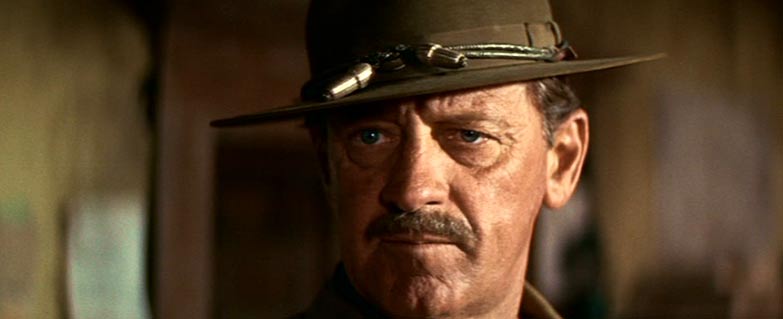
The Bunch, disguised as army officers, are on their way to rob the railway payroll in the dusty little border town of Starbuck. Riding in on horseback, charismatic leader Pike Bishop, played by William Holden, sees a group of children playing by the side of the road.
When they get closer, he can see that the children have built a dirt colosseum on top of an anthill and within it, two giant yellow scorpions do their best to fight off the horde of ants that have subsumed them.
The robbery is foiled by bounty hunters and a massacre ensues, during which many innocent townspeople and passers-by are killed. As the Bunch flee, Bishop gallops past and sees that the children have set fire to their colosseum and every creature within it perishes, finally tortured to death in the flames.
Fire, suffering and vastly more intelligent and powerful actors without compunction or empathy for the creatures at their mercy are the definitive elements of the metaphor.
The metaphor wasn’t actually Peckinpah’s idea. According to W.K. Stratton, author of The Wild Bunch: Sam Peckinpah, a Revolution in Hollywood and the making of a Legendary Film, the Mexican filmmaker and actor, Emilio Fernandez, told Peckinpah one day after shooting about how he and his friends used to put scorpions on anthills as children and, after the ants had killed the scorpions, they would set fire to the anthill. Legend has it that Peckinpah couldn’t get to a phone fast enough: he rang Warner Brothers and said, ‘I want scorpions, I want ants and I want ‘em now!’
-P. 201
Peckinpah was born in 1925, four years before the publication of A Farewell to Arms. Hemingway’s novel was an instant classic and became deeply influential. The Wild Bunch, made twenty-four years later, was initially a failure, recut by Warner Brothers executives before its release into cinemas.
The film became a profound influence on the generation of kids that saw it that went on to become filmmakers – Scorsese, Coppola, De Palma – and has since developed a reputation as one of the most significant and influential Westerns ever made.
Camille Paglia made the observation that the canon is defined by artists: it is a ‘cascading tradition of influence’. It is highly likely that Peckinpah was influenced by Hemingway. A Farewell to Arms became a literary sensation shortly after he was born and would have had major currency in a culture where ‘masculinity in crisis’ was one of the principal concerns of the day.
Metaphor is a language you imbibe, rather than learn. Where images are concerned, this is part of what we mean by the word ‘poetic’.


 Theme Park at its Darkest
Leave a comment