Pussytown: Denis Villeneuve punks out on Blade Runner 2049

‘You’ll love the new Blade Runner – unless you’re a woman.’
- Sara Stewart, New York Post, Oct 4, 2017
There was much ‘feminist’ criticism of Blade Runner 2049. I found it almost as astonishing as the pissweak rejoinder from its director, Denis Villeneuve in Vanity Fair, November 25, 2017:
“Blade Runner is not about tomorrow; it’s about today. And I’m sorry, but the world is not kind on women.”
My question is: what the fuck kind of film did Sara watch? And why doesn’t Villeneuve have the balls to stand up and defend the film he made?
Simone De Beauvoir defined patriarchy as the set of ‘social, cultural and economic engines that keep one sex in service for the benefit of the other.’ It seemed to me that Blade Runner 2049 is set up as a rather unique critique of patriarchy, or at least, its own particular dystopian incarnation.
Very early, the metaphor of the Steadfast Tim Soldier by Hans Christian Andersen is introduced into the story. This is presented in a somewhat obvious reference by way of graffiti in the stairwell of K.’s building. The Steadfast Tin Soldier can also be read as a critique of patriarchy, although I very much doubt it was written as such.
The name K., of course, invokes distinctly Kafkaesque resonances. The letter is provided in place of a name for the protagonist of the novel The Castle. It calls to mind the figure of a loosely-defined everyman, psychologically tortured within the mechanisms of a bureaucracy of which he discovers himself a prisoner.
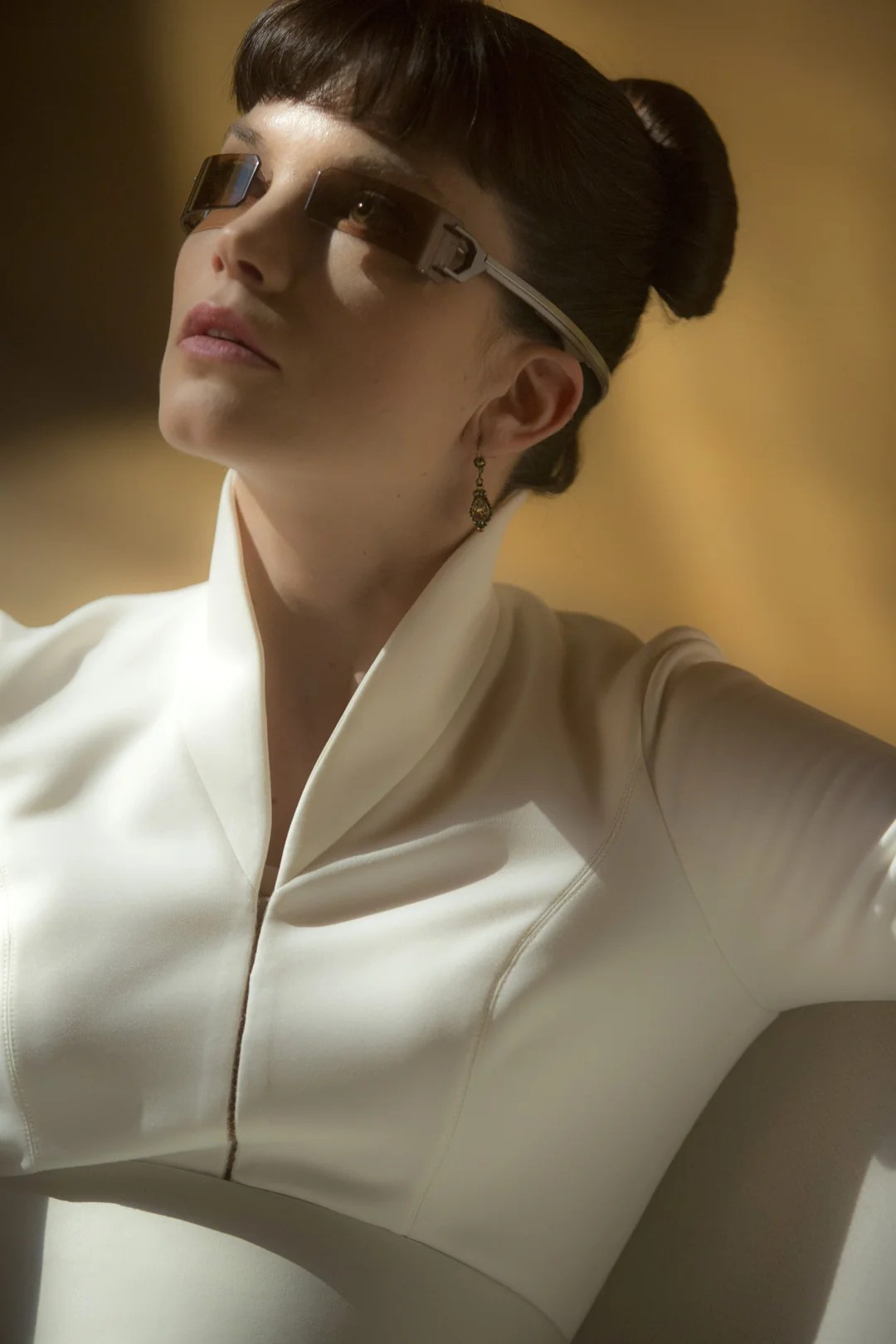
Played by Ryan Gosling, K. is a replicant used for hunting replicants. His boss is a woman, and the assassin who hunts him – ironically named ‘Love’ – is a woman, also. By definition, patriarchy doesn’t elect women to positions of seniority and control; however, these women have been denuded of any vestige of what is traditionally considered feminine, other than the outer garb of their gender.
In the commission of his job, K. is tortured and injured both physically and psychologically until he snaps. When that happens, he is punished and rejected. Ultimately, the best he can hope for is to perish in service of the happiness of others.
Like the eponymous hero of The Steadfast Tim Soldier, K. exists to suffer on behalf of others. Like the soldier, his occupation is his identity. Ultimately, he is an instrument of policy whose body is expended as currency.
As I discussed in an earlier post, the most remarkable, mesmeric feature of the film is its stunning poetic metaphor for pornography and its use by the terminally lonely. The only thing that offers K. kindness and companionship is a hologram.
Anais Nin is credited with the observation that, ‘We don’t see things as they are; we see them as we are.’
And sometimes, we contort them into instruments for advancing our own politics, as opposed to looking to discover what other people have had the courage – and honesty – to birth into the world from the obscure and darkling mirrors of their own souls.
Since Blade Runner, Villeneuve has retreated into blockbuster territory, now acclaimed for the Dune films – which are about as complex and interesting as a box of water crackers. Gone are the Peckinpahs and Verhoevens it seems, and with them, the exhilarating danger of being challenged, confronted and frightened by the monsters lurking within our own natures.


 Theme Park at its Darkest
Leave a comment