Black Rabbit
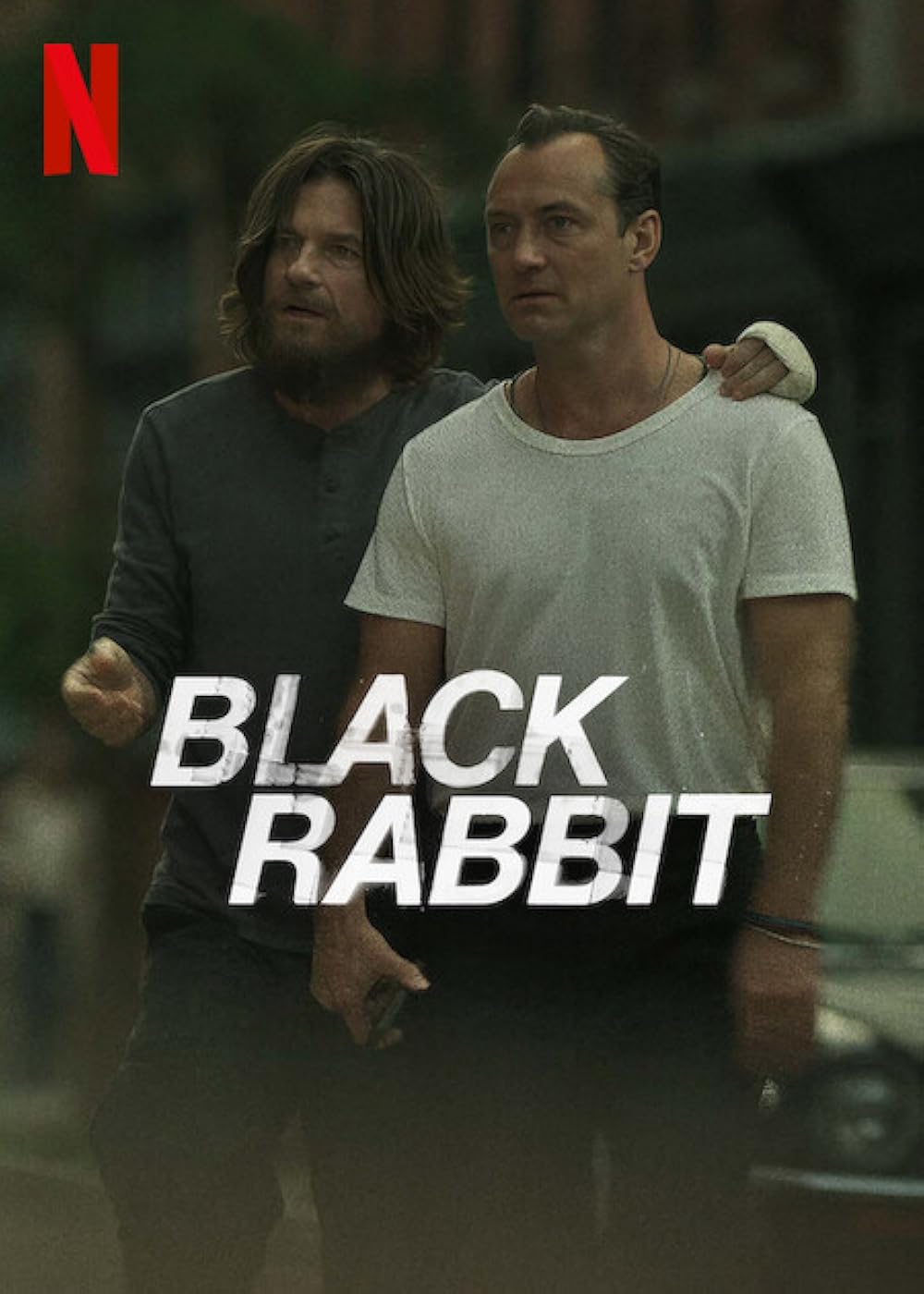
The eponymous Black Rabbit is a restaurant, a ‘nightclub for grownups’, to quote protagonist Jake Friedkin. While the business is a hit, proprietor Jake (played by Jude Law) is painfully over-extended.
When the opportunity to take over a second prestigious restaurant emerges in the wake of a glowing New York Times review, Jake is trying to join the dots so that he can relax into some kind of stable success. Into all this crash-lands the walking disaster of his estranged brother, Vince.
The brothers Freidkin have a relationship that is both fraught and complex, especially given that Vince was instrumental to the restaurant’s initial success; he brought together the staff, found the venue and pressed Jake to sign a lease and take the risk.
The morbid terror stalking Jake’s every decision is a familiar feeling to anyone who has started a business; diving off the precipice of financial failure to swim through tonnes of seemingly fruitless work with staffing problems and the shadow of bankruptcy looming over all of it.
And anyone who has worked in a bar, or a restaurant or nightclub also knows that all kinds of transgressive, socially unacceptable bullshit transpires when people are partying, with the accelerants of late nights, drugs and a carnivalesque environment active in the mix.
Black Rabbit resonates with echoes of Benny Safdie’s Uncut Gems; a place not unlike the New York we traversed in Sean Baker’s masterpiece, Anora. I think the true godfather of this kind of New York drama is Abel Ferrara; not simply because of its urban jungle quality, but also the convoluted moral landscape that distorts your capacity for identification with its characters.
Ferrara demonstrates a gift for creating a moral complexity that doesn’t just complicate your perspective of other people, but also of yourself. A lot of the power of Black Rabbit is derived from this mounting discomfort becoming part of the charge of its drama.
The great pivot of the show for me was when Jake, while perusing security camera footage, discovers proof that one of the regulars, Jules, had spiked the drink of barmaid, Anna. Anna was there from the inception of Black Rabbit, and a fundamental feature of its success. Jake fired Anna after she failed to show up for work, but it soon becomes clear that Ana failed to show up because Jules had sexually assaulted her.
As Jake considered deleting the footage, I felt a prickling in my meta intelligence; ‘If he does that,’ I thought to myself, ‘I will lose all sympathy for him.’ He doesn’t, and so the possibility of disaster that footage creates goes back into the fulminating cauldron of the story.
When that footage later re-emerges, it creates the possibility that Jake will be found guilty of concealing it – and guilty of lying to the cops. By this time, I was relieved when he chose to delete that same footage.
And by this point, I was also fully appraised of the dreadful assault that Anna had suffered, loyal and decent as she had been, and I was still relieved that Jake had deleted the footage, which I am not only aware is a moral crime, but was also something I was ready to lose sympathy with him over only a few hours earlier.

 Theme Park at its Darkest
Leave a comment