Black Rabbit
2.
The golden rule of commercially successful narrative art is that the writer has to push their characters into insoluble situations, and have them find their escape. Those escapes are the watermark of quality.
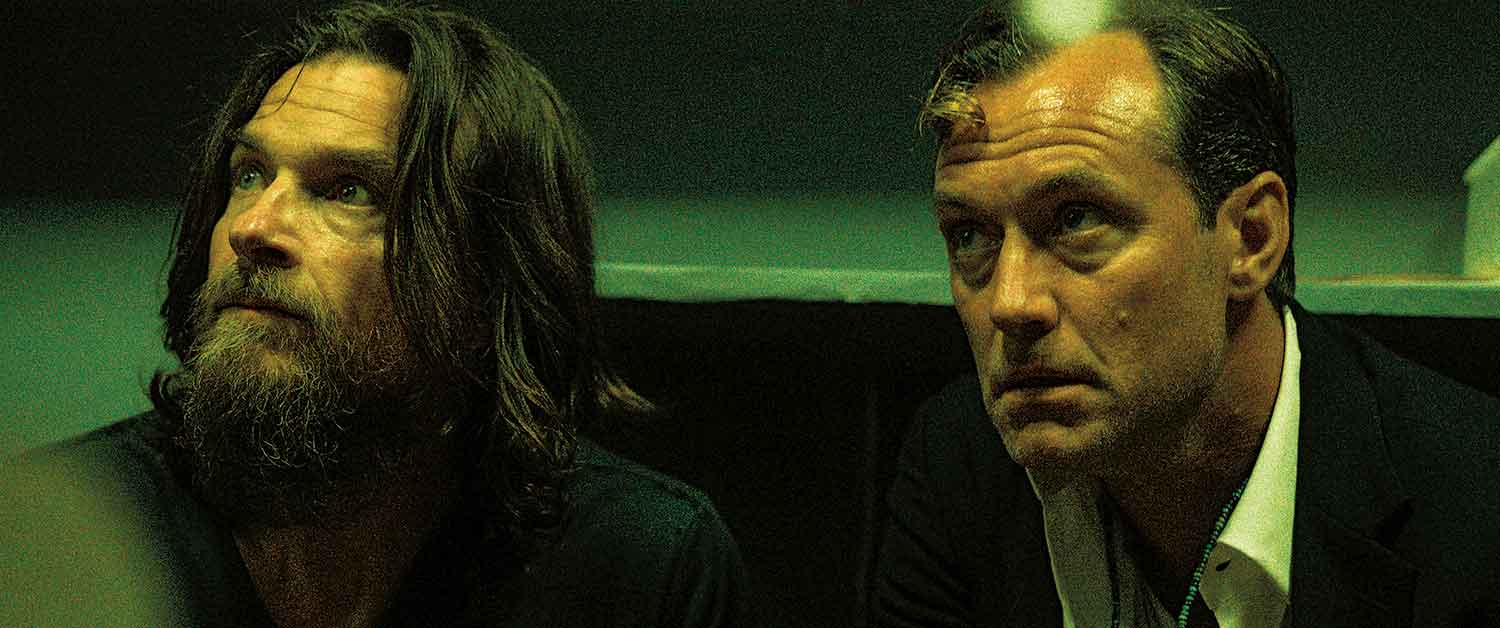
Jake and Vince’s decisions evolve through crisis to ever greater crisis, drawing you deeper into circumstances as the stakes get ever higher.
Both Jake and Vince do a number of shameful, morally reprehensible things, and it becomes increasingly difficult to retain sympathy with them. Casting is essential to pulling this off and for this reason, Jason Bateman and Jude Law are the beating heart of the show.
Counterpoint to them is Roxie, the chef whose cuisine is a principal factor in the success of the restaurant. She has a lot of criticisms of Jake, many of them springing from her own moral scruples relating to what has happened to Anna.
Roxie soon becomes an antagonist who we know is ‘right’. And when she makes her play at a coup for ownership of Black Rabbit, we are fully aware of the validity of her reasons.
Much of the action in Black Rabbit transpires through dialogue and performance. You have to listen closely to be able to plot your way through events, and I had to watch it a second time in order to follow the story precisely.
I really enjoy this kind of storytelling, and a lot of the reason is because it trains you for developing your interactions with others; so much of what you know about people comes from listening to what they say, and then squaring it against what they do. You could, in fact, describe this is as one of the essential features of ‘realism’.
Much of the criticism directed at the show cites the undesirable, fundamentally unsympathetic nature of the brothers; their propensity for risk and the way it influences their often rash and selfish decision-making.
Again, this is a work in which people spend a lot of time shifting across moral lines. People who are successful in business often have a high propensity for risk-taking. It is very difficult to array these kinds of negative elements against a character and for them to remain sympathetic.
Watching an Abel Ferrara film, even more than a Martin Scorsese picture, is a distinctly Catholic experience. You descend into taboo, drawn towards what is both prurient and enticing, confronted by people who are both repugnant and sympathetic.
Eventually, you find yourself skewered on your own conscience; wanting to be disgusted by someone you know it is your moral duty to recognise as human, and therefore, no better or worse than you are.
For some, this is a disturbing, cathartic and ultimately humanising experience. Which is either a big ask or the crowning achievement of a series intended to be ‘entertainment’.

 Theme Park at its Darkest
Leave a comment