Carldav13 Writes:
2.
Technology, specifically the railroad and the telegraph, is shrinking the West into a place where bandits can no longer freely operate. The Bunch are trying to make one last score so they can afford to retire, but the brutality central to their existence is catching up with them.
They seek to make one last stand against the future that promises extinction by staging a suicidal massacre; embracing violent death on their own terms, and taking as many of their adversaries with them as possible.
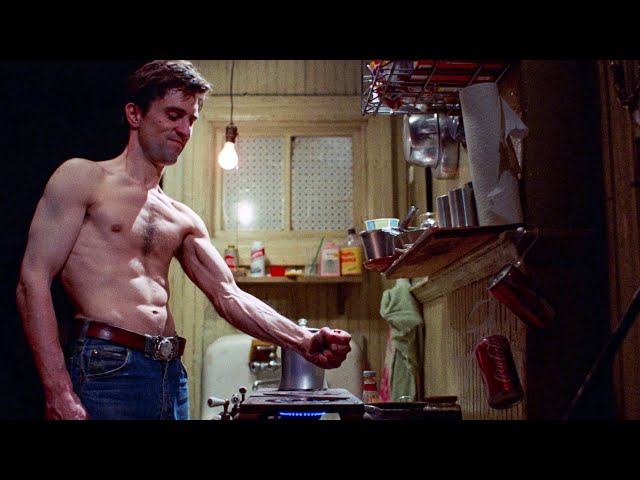
As I am sure you will agree, Taxi Driver is not an action film. It’s probably best described as a drama, in which Scorsese masterfully illustrates Travis’ internal world using the features of the decaying New York in which he lives. The film’s only action scene, the massacre at the end, provides its climax.
The greater the artwork, the broader its metaphorical interpretation, but to me, Taxi Driver chronicles the story of a man who is at odds with his society and cannot integrate. He makes different attempts using the myths he has gleaned from popular culture, but all of them come up short, confirming him to be an outsider. People reflect this back at him, isolating him further with every failed attempt.
Having failed to rejoin his society, he decides to take a stand against it, much like The Bunch, and stages a massacre on the pretext of ‘saving’ Iris, a damsel in distress. Of the many disturbing and bizarre instances in the film, Travis’ final exoneration of wrongdoing and being embraced as a hero is evidence that Travis is not the lone sicko; indeed, the society itself is sick to its core.
Taxi Driver gives us omnipotence. We see Travis’s life, the weirdos he comes into contact with (Scorsese himself appears in a cameo, talking about shooting his cheating wife in the vagina with a .44 magnum), and his ultimate freakout. Finally, the film contrasts all that with his exoneration as a hero, a status justified by both Iris’ father and Travis’ former love interest, Betsy.
The key to Narcissism as a diagnosable personality disorder is the notion of a wound to the psyche of the sufferer. Narcissus gazes into the pond and falls in love with his reflection because he is wounded. Travis is very clearly wounded, but its exact nature is part of the mystery that drives the film. He wears a patch on his jacket, ‘King Kong Company’, which suggests he is a veteran of the Vietnam War, but that’s all we’re given.
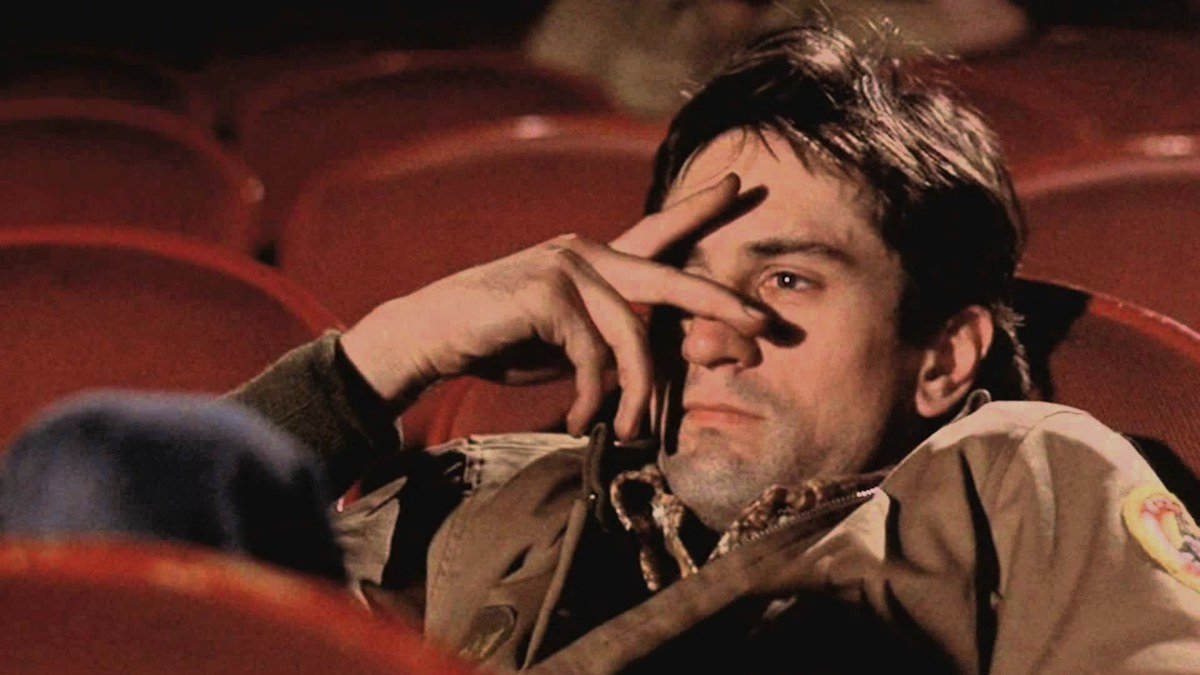
Terry Real writes that the cycle of shame and grandiosity forms the plot of every action film of the last fifty years, typified by a film like Rambo: First Blood. Taxi Driver is a drama that meditates on whatever it is that drives men to stage mass murders as a means for making a stand against their society.
This seems to be a distinctly American phenomenon. After the Sandy Hook School Shootings in the US in 2012, President Barack Obama gave a deeply moving address about the need for gun reform. Obama said that ‘countries like ours, including Australia and the UK, have succeeded in changing their gun laws and putting an end to mass shootings.’
I saw a television editorial given by an Australian journalist shortly after (which, for the life of me, I have never been able to find since) where he explains that Obama is wrong; Australia is nothing like America, which has never been able to surrender its Wild West mythology.
Mass shootings by a lone (almost always white) male are a phenomenon that has become so commonplace in the US that it doesn’t even make the news anymore. And still, we bend over the dark mirrors of our own, looking for Travis. Rambo is the pathology; Taxi Driver is the analysis.
Who is it that’s looking? Who is it they are talking to? And what is it they see?

 Theme Park at its Darkest
Leave a comment