Archive for the Reading Category

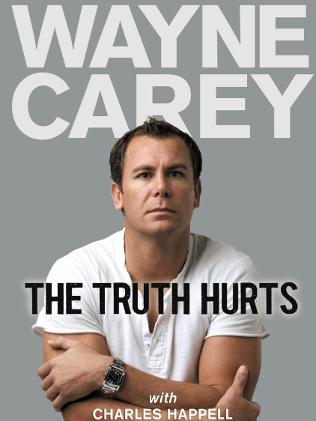
Wayne Carey: The Truth Hurts

Posted in Journalism, Observation, Reading with tags , , , , , , , , , , , , , , , , , , , , , , , , , on June 17, 2012 by Jarrod Boyle

667234-wayne-carey

I went into this book hoping for a Raging Bull story (I’m referring, of course, to Martin Scorsese’s film about the boxer, Jake La Motta). That said, I was expecting a fairly blunt and simplistic tool designed to resuscitate Wayne’s media career. I was disappointed on the one hand, confirmed on the other, but nonetheless, held in the grip of the tale. Continue reading

Wendy Waters

Posted in Reading, Real Men with tags , , , , , , , , , , , , , , on May 24, 2012 by Jarrod Boyle

285770_10200509959568539_591277202_n

Wendy Waters is the best unpublished writer I know. Continue reading

Catch the Moon, Mary

Posted in Reading with tags on May 24, 2012 by Jarrod Boyle

This is the first chapter from ‘Catch the Moon, Mary’, by Wendy Waters, as promised. 

At its best, his soul was in flashing, quivering, constant motion: the gold, yellow, white and silver light of it darting about like fish in a sunlit bowl. But this interminable quest had dimmed and contracted him.

Continue reading

Leo Tolstoy Vs. Robert S. McNamara

Posted in Observation, Reading, Real Men with tags , , , , , , , , , , , , , on May 2, 2012 by Jarrod Boyle

One of the most interesting aspects of reading is that sometimes you might read something and, regardless of whether you enjoy it or not, it begins to creep into your thinking. You start to see it everywhere; kind of like when you’re walking the streets in a strange country and you feel as if you keep catching glimpses of people you know. Continue reading

War and Peace

Posted in Reading, Real Men with tags , , , , , , , on April 27, 2012 by Jarrod Boyle

I finished it. Continue reading

Tolstoy Versus Napoleon

Posted in Reading, Real Men with tags , , , , , , , on February 24, 2012 by Jarrod Boyle

The thing about a book like War and Peace that first makes an impression on you is its size. Continue reading

Why the Internet is Truly Awesome

Posted in Observation, Reading, Ridiculous curiosity on February 8, 2012 by Jarrod Boyle

Question: What’s the difference between an instrument and an implement?

The World is a Deaf Machine: The Loser’s Manifesto

Posted in Observation, Reading with tags , , , , on January 24, 2012 by Jarrod Boyle

The Red Tree – a children’s storybook – is one of those rare works of art so powerful, it completely transcends its genre. However, I would never allow my kids to look at it. Continue reading

In My Craft or Sullen Art

Posted in Reading, Real Men with tags , on December 29, 2011 by Jarrod Boyle

Writing is hard. Fighting is much easier, in a way; if you train hard and win, you progress. With writing, you can work assiduously, but ‘success’ (finding an audience) seems to come down to ‘market forces’, or whatever else governs publication. The simple fact of all this, however, is that it’s whinging. Both are arts; styles of asceticism and require sincere, selfless dedication.

The impulse to quit is grounded in vanity. When I need a righteous kick in the pants, Dylan Thomas is the man I go to see. Continue reading

War and Peace, p.242

Posted in Reading with tags , on October 24, 2011 by Jarrod Boyle

“He told them about his Schongraben action in just the way that those who take place in battles usually tell about them, that is, in the way they would like it to have been, the way they have heard others tell it, the way it could be told more beautifully, but not at all the way it had been. Rostov was a truthful young man, not for anything would he have deliberately told an untruth.

“He began telling the story with the intention of telling it exactly as it had been, but imperceptibly, involuntarily, and inevitably for himself, he went over into untruth. If he had told the truth to these listeners, who, like himself, had already heard accounts of attacks numerous times and had formed for themselves a definite notion of what an attack was, and were expecting exactly the same sort of account – they either would not have believed him or, worse still, would have thought it was Rostov’s own fault that what usually happens in stories of cavalry attacks had not happened with him. He could not simply tell them that they all set out at a trot, he fell off his horse, dislocated his arm, and ran to the woods as fast as he could to escape a Frenchman. Besides, in order to tell everything as it had been, one would have to make an effort with oneself so as to tell only what had been. To tell the truth is very difficult, and young men are rarely capable of it.”